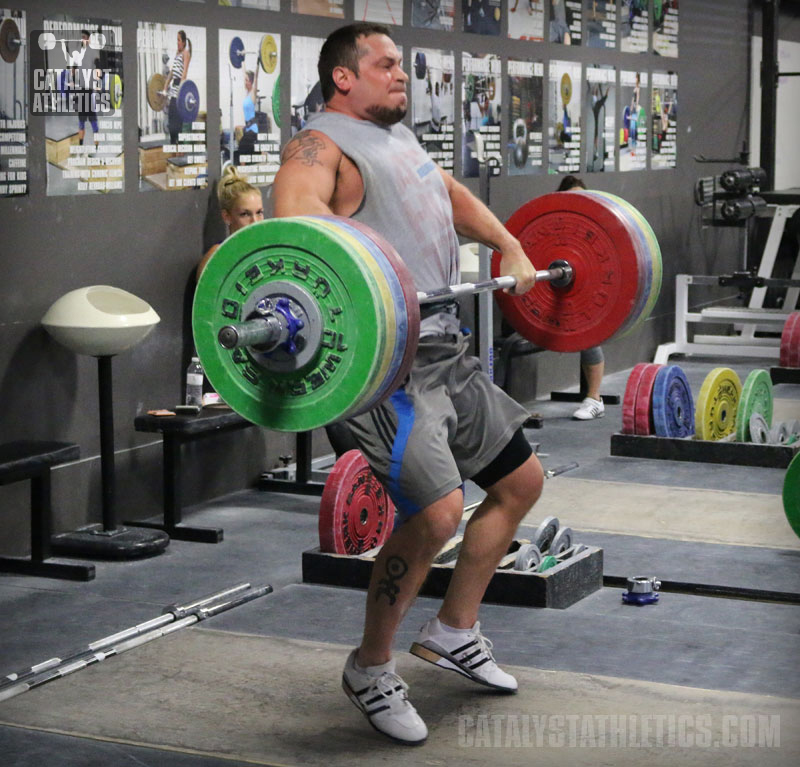
Just take a look at some of these young people and the amount of weight they move... unreal.
CJ Cummings is a 150 lb freak athlete. At 14 years old he is breaking records for school age kids and beating 25 year old men. This is an American youth record and darn strong. 156kg (343lbs) from ground to overhead... unreal.
Mattie Rogers breaking a snatch record for juniors. She snatches 91kg (200lbs) at a bodyweight of 138lbs.
Last time we discussed the pulls for the snatch and the
clean from my rookie perspective. This time we will discuss the all important
catch positions, without which, you really cannot put your best weight
overhead.
Snatch
There are a couple of ways to catch a snatch or clean.One of them is the split position,
which looks like an exaggerated lunge.A bunch of old school lifters did it decades ago, but no top shelf
lifters of today do it below about the age of thirty.The most effective way to catch as much weight as possible
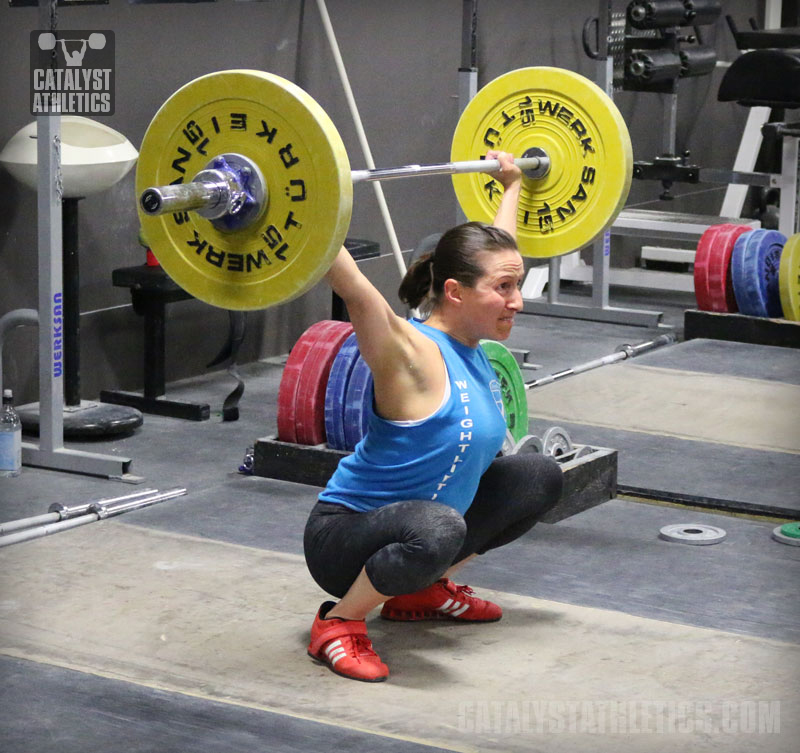
is in a very deep squat. For the snatch, you should shoot for having the
armpits facing forward (arms fully externally rotated), which will create the
most stable shoulder position. Additionally your torso should be as upright as
possible, which is usually improved by better mobility in the hips.Since most people struggle with a
valgus knee position while squatting (knees caving inward) a cue to shove the
knees out so that the thighs are in alignment with feet is very helpful.If all of this lines up well, then the
bar should be lastly positioned behind the head where the weight is really
supported by the upper back and not stressful on the shoulders.
Clean
The clean has a lot of the same properties as the catch of
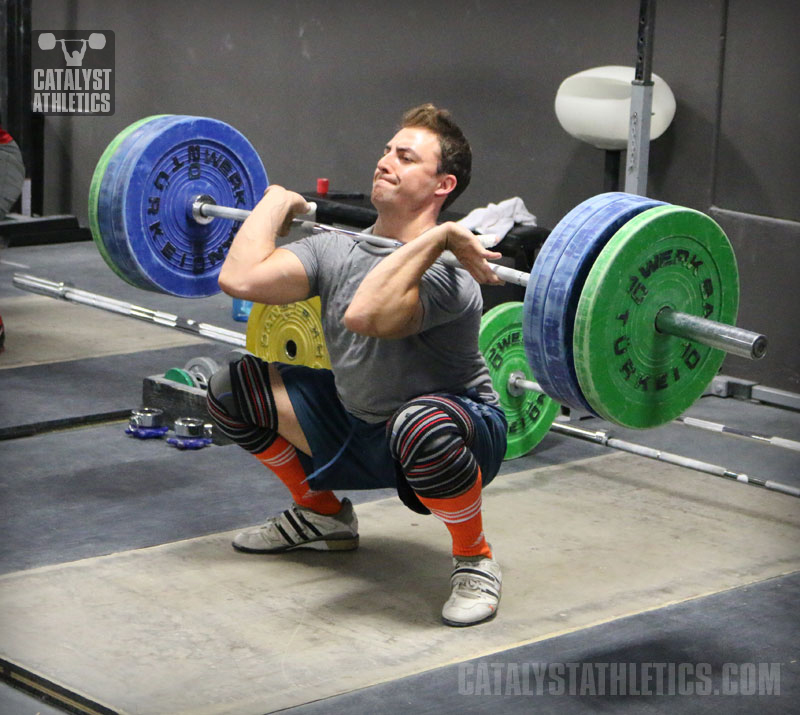
the snatch.The squat should be as
deep as possible unless you are a splitter, in which case you aren’t going the
medal in the Olympics. The squat should be almost identical with the torso
upright and the thighs tracking over the feet.The bar should be sitting on the meaty part of the shoulders
and shoved all the way back into the throat with high elbows.The hands do not support the weight at
all, but are only there to keep the bar pushed back a bit and ready to
transition the overhead jerk position.
So there you have it.We discussed the pull last time, and this time we worked on how to catch
the bar after you pulled as hard as you possibly can.So go out there find a coach, video yourself, watch the
greatest lifters in the world online, take seminar, and by all means snatch
clean and jerk and squat.
Here is what they look like put together to perfection!
Weightlifting, like any sport with a need for technical
proficiency, has certain positions that seem to be critical.To clarify, I am not a guru of the
sport, but rather a late arriver to the game that has studied it quite a bit in
my short time.If you a want more
geeky analysis, seek out actual experts.I am going to give the novice a few things to look for, from a
positional standpoint, to really keep an eye out for.Use a video camera, in lieu of a good coach, and try to make
certain you hit these positions.In this first installment I will break down the pull from my
perspective.
Pull
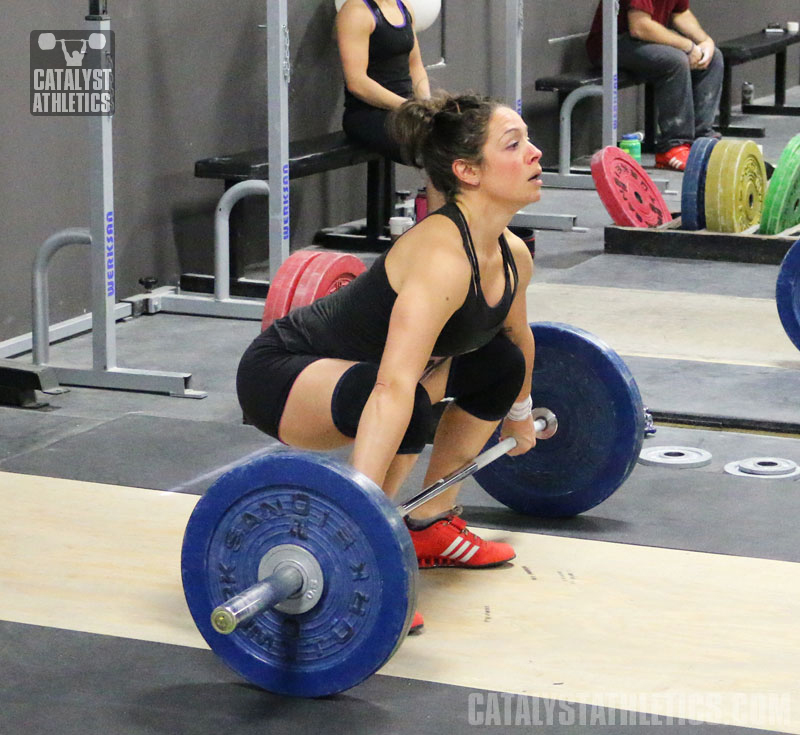
Start Position – the start position can vary.I have seen and tried with my shoulders
starting behind the bar from the floor, over the bar, and ahead of the bar.For the most part, everyone eventually
gets to where their shoulders are just ahead of the bar as the weights comes
off of the floor.
Below the knee - As the bar is just below the knee, as is
true for any pull, the back must be straight.Additionally the shoulders should be in front of the bar
with your weight clearly off of your toes.
Hip - When the bar gets to the hip (or high thigh for
clean), this is called the power position.You should still be off the toes and the shoulders should
have moved to where they are now behind the bar slightly.At this point, the bar should clearly
be in contact with the body. The knees will be bent after having straightened prior. This is referred to as the double knee bend.
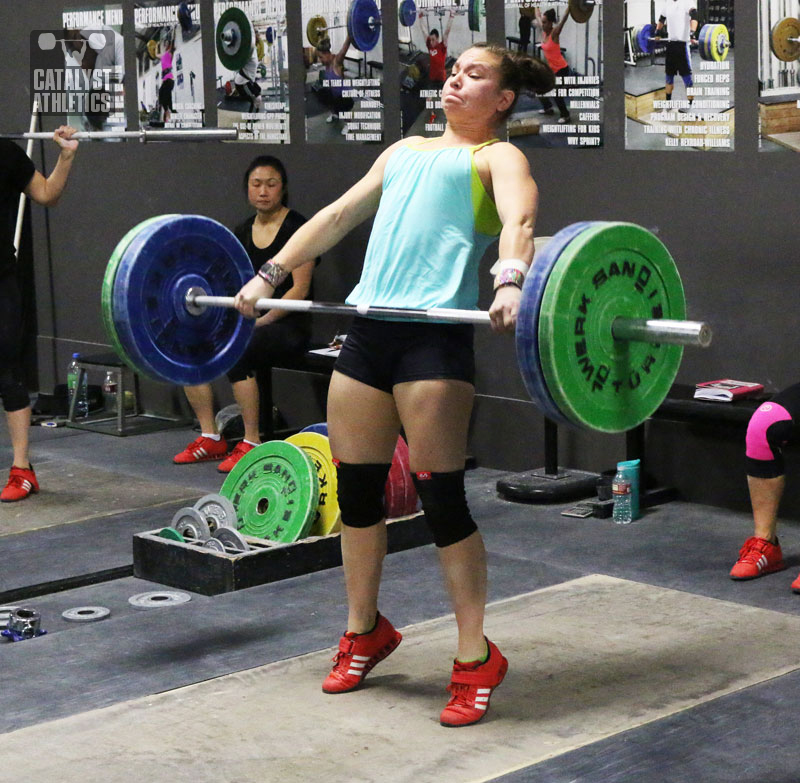
Finish - The final portion of the pull up is called the
finish position.At this point
there should be maximum extension of the hips and knees. Some lifters end up on
their toes while some don’t.Additionally the shoulders should be well behind the bar.
Pull under - The last of the pulling is actually where a
change of direction takes place.As the bar reaches its maximum height at full extension, the lifter will
now quickly pull himself under the bar to try and beat it back down.To clarify, this is a pull of the
lifter down as opposed to a continued pull of the bar up.Make sure that the bar is still over
your base of support (feet) and not out front of it.
Next time we will find out how to catch the bar after the
beautiful pull.Again, this is
just an amateur’s look at the pull in weightlifting. Just as a quick reminder, the American Weightlifting Federation's kick off meet will be live steamed from Las Vegas on January 16 - 18 with a whole batch of big name competing. Don't miss it.
Competition is a wonderful thing. It is one of the many reasons that capitalism is the greatest system of economics/society that exists. For many years, USA Weightlifting has been the only weightlifting federation in the U.S. A Quasi-excommunicated top level lifter, Jon North has now brought this to an end. He and a few others have founded The American Weightlifting Federation. If you have been to a USAW competition, you have to be a real fan not to have fallen asleep occasionally. The AWF is bringing a DJ, your choice of music to lift to, and more of a "party" atmosphere. Hopefully this will push USAW to improve the environment of its venues.
The American Open was this past weekend and there were some great lifts, even if a few lifters missed the Washington DC meet. Jared Fleming made a great comeback in the 94kg class by winning gold in the snatch, c & J, total and won best male lifter at the competition.
I have been out of commission for a few weeks due to the birth of my second son, so I have not had a bunch of time to write a blogpost. So with that being I am going to link to a blog I wrote quite some time ago called Just Pull the Trigger. It is one that a lot of people (including myself) need to read now and again. It deals with the extremely paralyzing "indecision". In the future I am going to go into detail about some programs that I have been tinkering with, to improve my lifting. But since I am here I might as well post a weightlifting video. This is Ilya Ilyin in the 2014 World Championships just a couple of weeks ago. This man recently moved up weight classes, and set a world record in the clean and jerk to win yet another world championship.
Over the past year or so, I worked on my snatch technique
like a mad man.I took a page out
of the Dan John book (look him up).His philosophy is, if you want to get better at something, work on it
every day.While it is not
necessary to take this literally, the idea is to practice the skill as often as
possible.That is what I did.Every workout began with snatch
technical work.Over the course of
several months (without a coach) my snatch went from 75kg (165lbs) to 96 kg
(212lbs).With limited time like
everyone else with a job, wife, kids, and a bad back, this took time away from
the other lift: the clean and jerk.Over the same course of time, it has increased from 110kg (242 lbs) to
115kg (253lbs).The neglect
brought with it poor progress.So
with that being said, I have now started devoting more practice to the clean
and jerk and specifically the clean portion. My goal is to stay connected to the bar and actively pull under on the clean faster. Finish my pull, and therefore have a higher contact point on the hips and have a faster dip on the jerk.
115kg from about a year ago
New and Improved Technique from a yesterday
This leads me to my rookie thoughts on what it takes, from my perspective, to improve in weightlifting. These things could easily have carryover to other physical skills... but weightlifting is cooler. These are the Four Ps of Weightlifting according to TP.
Position (technique)
You must, for any skill, get to the right position in order to perform the skill with any level of proficiency. The quick, down and dirty things I came up with for weightlifting are the following.
-Keep the bar over the center of base (foot) as best as possible. The degree to which it moves away, creates inefficiency.
-Get to the power position... shoulders slightly behind the bar, after the double knee bend with the torso upright. To be honest, I am not sure it matters how you get to this position, as long as you do.
-Coach Mike Burgener always says to finish! This means that once you get to the power position, "jump", "extend", "catapult" as hard as you can. While the snatch and clean finish are slightly different, your shoulders should be well behind the bar before you start your pull under it.
-overhead/rack position
-Overhead positon and rack position are a must for the snatch and clean respectively. The overhead position for the snatch must have as much of an upright torso angle as you can muster. The rack for the clean requires the the bar on the shoulders with high elbow.
Positional Strength
You must have the strength to get to the above positions, so therefore, work accessory movements, as needed to improve weaknesses. For the snatch and clean both, you must do some sort of pulls to strengthen the back off of the floor. Also, for the clean and the jerk both.... squat. Back squat and front squat... lots.
Progression
-Have a plan that involves a slow, methodical progression and then show up every day. Add 2kg to your squat every week over the course of a year and you will get stronger. This concept applies to both lifts and accessory lifts. Slowly get a little stronger every week.
Purpose
-Find something very tangible to train for. A meet is ideal, because it has the added benefit of potential embarrassment. If you have something that you believe in, you will be passionate and you will chase it.
The 80-90% Gap Program is an article written by the quite witty Matt Foreman. He is a regular over at Catalyst Athletics. The gist of the article is that sometimes it pays to just lift sub maximally for a while to allow you to work on other things in your program or life. Good common sense article.
Competition makes everything better, so it is about time someone stepped up. Jon North over at The Attitude Nation has just created the brand new American Weightlifting Federation. This is a great way to make USA Weightlifting step their game a bit or just step aside. The kickoff for the AWF will be January 2015 in Las Vegas. Some of the high points of the event is a live DJ, great vendors, bar slamming, and the fact that you get to pick six songs to come out to, for all six attempts. Time to move the sport forward!